

Reflection on Capstone Project
- megzgwaunza
- Nov 14, 2021
- 6 min read
The main reason that I chose to do this topic for my capstone project was that this year we did an identity and representation course with one of our lecturers, Nyx McClean. By coming to Rhodes, I found that I had to learn more about South African culture and did not have much of my Zimbabwean background reflected in my work. The course started a chain of events in my mind, and I brainstormed different ways to incorporate it into the capstone project that we had to produce for the end of the year.

This should have been an easy task, but it is hard to talk about your identity when you find it difficult to talk about who you are and how that impacts the way you view the world. I had to go back to the reasons why I came to Rhodes and what drove me to apply for the Journalism course specifically. Those two reasons were football and politics. I automatically ruled out talking about football because I don’t watch any local football, so that would be very hard to cover, so I looked at the political aspect.
Initially, I planned to do a project on the health care system in Zimbabwe and how COVID 19 has shifted attention away from other high-risk diseases within the country. This stemmed from an article that I read in which cancer patients were finding it hard to get treatment in the country because of fear of contracting the virus in the hospitals. After talking to my mentors, we both agreed that the topic would be too complex to cover because it would be hard for me to talk to actual patients. After all, I could infect them.
Feeling demotivated by this, I shared my grievances and frustrations with my friends in the dining hall at dinner time, and they calmed me down and tried to help me brainstorm new ideas. That is when I bought up the idea of looking at the informal sector in Zimbabwe and how COVID 19 has affected it.
When I went home in December last year, I noticed that many people were now selling things out of their cars when I went to the shops or that people were vending to supplement their salary from their formal jobs. This then made me question how the vendors were coping because at the time, there was a lockdown and lockdown times for shops was from 8 am to 3 pm and then everyone had to be in the house by 5 pm. Vendors were banned from entering the CBD, their main sale point, which crippled them even further.
Growing up in Zimbabwe, you grew up used to the country’s economic struggles and how you continuously watch fellow citizens fight to make ends meet for their families. I wanted to showcase that to the people within my country and show it to people from foreign countries to understand Zimbabweans a little bit better. As a student, I am faced with the harsh reality that even if I do get a degree, there is a high chance that I may not get employed as soon as I go home. I, too, could also become a vendor to make ends meet. This is why all of us need to care about it, as it reflects the problems that come with having a bad economy. It moulds all aspects of your life.
I am doing multimedia this year, and last year, I specialised in audio production, so it was evident that my project would involve a lot of audio. I chose to incorporate writing and pictures to supplement this.
The project felt easy to do in theory, but the project changed when I got down to executing the different tasks I had put down. I came across various difficulties whilst planning for this project, which was:
Location- when I had first planned out the project, I had planned to go to Zimbabwe during our July vacation period and go around Harare (the capital city of Zimbabwe) and interview vendors myself. This then was met with a dead-end because I was unable to go home so I would now have to do the interviews remotely.
Remote interviewing- I now had a dilemma where I had to find an alternative way to interview the people I needed to get content for my topic. It could not be too costly because data in Zimbabwe is costly, and I did not want to inconvenience the people that I wanted to interview. The first idea was to use Whatsapp, but no app could record the person I was talking to and me. I then decided to go to my last resort, Zoom, which was not as costly as I thought if I managed to use it correctly.
Vendors that I wanted to interview: I was now unable to go home and screen the people I wanted to pick by myself. I started to feel a bit defeated because time was moving and I still did not have anyone to interview without the vendors; that would mean that I would have to change my capstone topic completely. I would have a hard time with that because I felt so passionate about this topic and did not want to let it go. I decided to talk to my relatives and friends from Zimbabwe to see if they would have an idea about who I should interview. My uncle then had the bright idea to email me links to the web pages of various vendors trade unions, and I got permission letters from the school and emailed them to ask if I could interview any of them.
It was a nerve-wracking process because they took quite some time to answer my emails; out of the five unions I had emailed, only two responded- VISET (Vendors Initiative for Social and Economic Transformation) and SVUZ (Survival Vendors Union of Zimbabwe). Even after they had responded it still took a while actually to get the ball rolling on the interviews
Data costs and schedules: one of the things that I learned from scheduling interviews is to compromise. I had to work my schedule around their schedule because I needed to speak to them; despite my strategic communications obligations, I still had to make sure that I made time for my interviews. In my first two interviews, my guests had wifi, but in the last one, they did not, so I had to get my father to pay for their data charges. It influenced my decision to have more guests because the data price was too much to pay.
Connectivity and sound quality issues: the main problem that I quickly learned with interviewing people through Zoom is how the quality of your audio can be affected. When you do your interviews face-to-face, you are aware of the environment you need, and you prep your guest on what to do so that the audio is of good quality. In the first interview, my guest stood outside, so the sound of the wind affected my audio. I could not interrupt him because we had limited time, and I did not want him to lose his trend of thought. This already affected my editing; guests also forget to put their phones on silent or hold their mics at different angles, so the volume levels are different.
Network issues also affected us because sometimes we had to repeat questions because the network would cut out the sound whilst someone was talking, or we would have to start the Zoom meeting again so that it resets it in a way.
Booking a room to work in and the equipment: booking a room in the department was a bit tedious because I had to make sure that I booked one of the conference rooms well in advance. It was a process because only after I talked to the administration office could I go ask for access to the computer in that room with the technical team. My guests would sometimes cancel or mix up times, so I would have to repeat the process more than once.
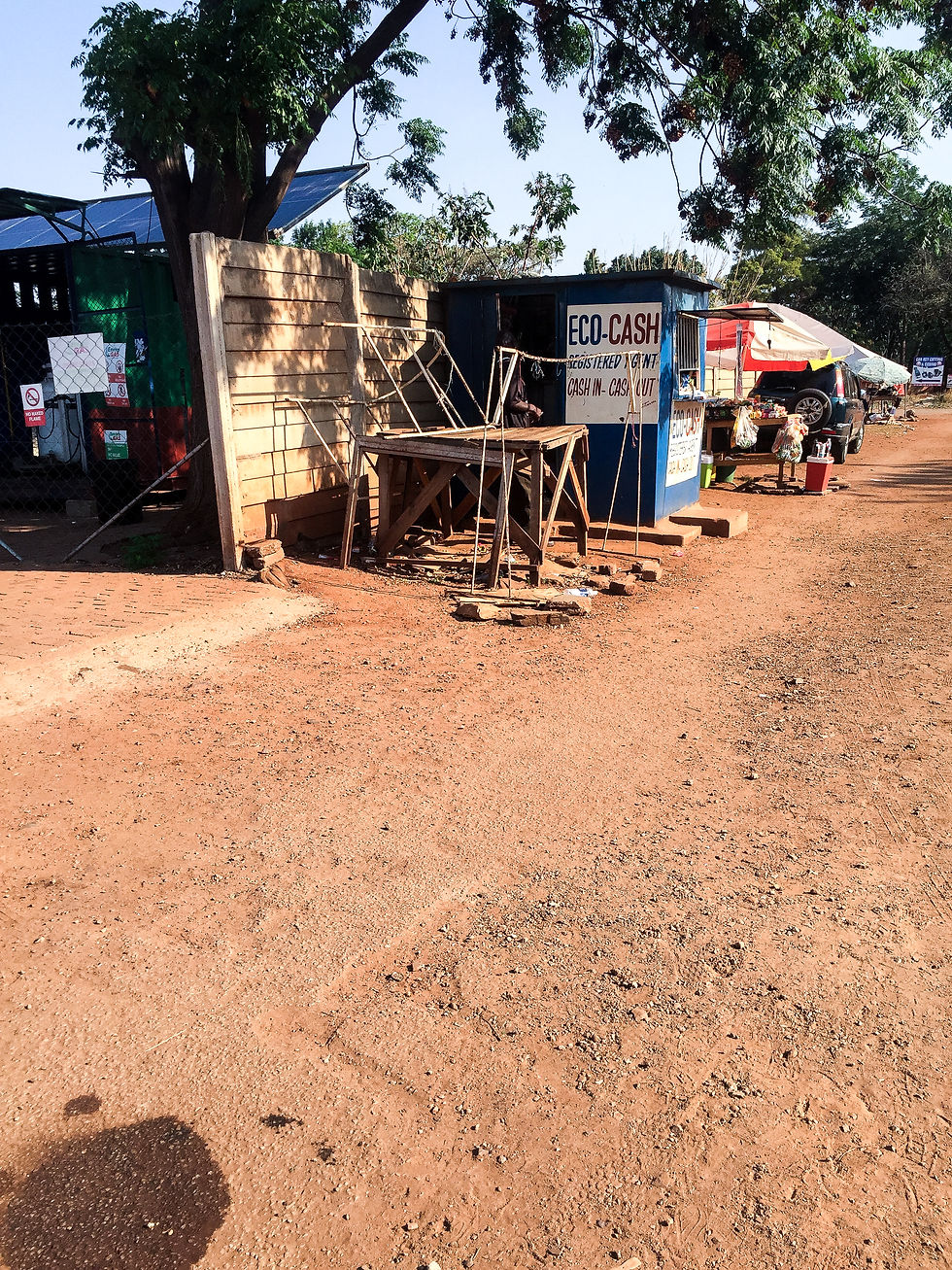
Pictures: an essential element of my project was pictures because you need something to visualise what drove me to want to talk about these topics. I could not go home, so I had to think of a way to train someone to take pictures of the things that I wanted. The best option became my father because my cousins were busy with their exams. I tasked him with taking photos of the different vendors he interacted with on his journey from Harare to Bulawayo. Surprisingly he did it well.
Time: This was one of the most significant limitations because no matter how much you hope to take up, it all boils down to if you have enough time to execute it. I was juggling many things, my other course, and the anxiety of doing my work well enough. This drained me a lot, and I found myself demotivated to do my job sometimes. That is when I had to find ways to push myself and burn off steam from being stressed. This year was one of the most challenging, especially since I still adjusting to learning online.
It influenced the number of guests that I had and how I chose to edit my interviews.





Comments